










Restaurant Bans Masks as COVID Cases
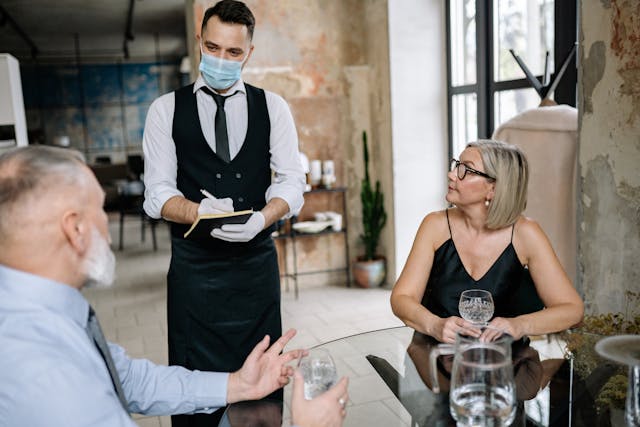
In a time when the world is still recovering from the long-lasting effects of the COVID-19 pandemic, decisions related to public health continue to spark debates across communities. One such controversial move has recently captured widespread attention: a restaurant implementing a ban on masks just as COVID cases begin to rise again. This unexpected policy has left customers, health experts, and authorities questioning the logic, safety, and ethics behind such a decision.
A Policy That Defies Expectations
Since the early days of the pandemic, masks have become more than just a health precaution — they turned into a symbol of collective responsibility. Governments, health organizations, and scientists consistently encouraged mask-wearing as one of the simplest and most effective ways to reduce the spread of the virus.
So, when a restaurant decides to go in the opposite direction by banning masks entirely, it naturally raises eyebrows. The management behind such a policy may argue that they are promoting a sense of normalcy or personal freedom. However, many see this as a risky move, especially at a time when COVID cases are once again on the rise.
The Reasoning Behind the Ban
Supporters of the mask ban often present a few key arguments. Some restaurant owners claim that masks create a barrier between staff and customers, making interactions less personal. In the hospitality industry, where customer experience plays a crucial role, face-to-face communication and visible expressions can significantly enhance service quality.
Others argue that enforcing mask mandates has become increasingly difficult, particularly in regions where regulations have been relaxed. From their perspective, banning masks simplifies operations by removing the need to monitor compliance or deal with customer disputes over mask policies.
There is also a segment of people who believe that individuals should have the freedom to choose whether or not they want to wear a mask. For them, the restaurant’s decision aligns with personal liberty rather than public health enforcement.
Public Reaction: Divided Opinions
As expected, the public reaction to this decision has been deeply divided. On one side, there are individuals who support the restaurant’s stance, praising it as a bold step toward returning to pre-pandemic life. These customers often express fatigue from years of restrictions and see this as an opportunity to move forward.
On the other hand, a large number of people are strongly opposed to the policy. For them, banning masks is not just a personal choice — it’s a public health risk. Many customers feel uncomfortable or even unsafe dining in an environment where protective measures are actively discouraged.
Social media platforms have amplified these reactions, with heated discussions, debates, and even calls for boycotts. The issue has quickly evolved from a local business decision into a broader conversation about responsibility, safety, and the ongoing impact of COVID-19.
Health Experts Weigh In
Medical professionals and public health experts have largely criticized the idea of banning masks, especially during a rise in COVID cases. According to many experts, masks remain a simple yet effective tool in reducing transmission, particularly in indoor settings like restaurants.
Even though vaccination rates have improved in many parts of the world, COVID-19 has not completely disappeared. New variants continue to emerge, and cases can surge unexpectedly. In such a scenario, removing basic preventive measures can increase the risk of outbreaks.
Experts also point out that restaurants are environments where people spend extended periods of time in close proximity, often without masks while eating. This makes them already high-risk settings, and banning masks entirely only adds to the potential danger.
The Business Impact
While the intention behind the policy may be to create a relaxed and “normal” atmosphere, it can have mixed effects on business. Some customers who agree with the policy might feel more inclined to visit the restaurant. However, a significant portion of the population may choose to stay away due to safety concerns.
In fact, trust plays a major role in customer loyalty. If people feel that their health is not being taken seriously, they are less likely to return. In the long run, this could harm the restaurant’s reputation and revenue.
Additionally, negative publicity can spread quickly, especially in today’s digital age. A single controversial decision can lead to widespread criticism, affecting not just one location but potentially the entire brand.
Legal and Ethical Considerations
Depending on the region, banning masks could also raise legal issues. If local health authorities still recommend or require mask usage in certain settings, such a policy could result in fines or other penalties.
Beyond legality, there is also an ethical dimension to consider. Businesses have a responsibility to ensure the safety and well-being of their customers and employees. Ignoring widely accepted health guidelines can be seen as neglecting that responsibility.
Employees, in particular, may feel vulnerable working in an environment where protective measures are restricted. This can affect morale, job satisfaction, and even staff retention.
A Reflection of Pandemic Fatigue
It’s important to acknowledge that after years of dealing with COVID-19, many people are experiencing what experts call “pandemic fatigue.” The constant cycle of restrictions, precautions, and uncertainty has taken a toll on mental health and daily life.

In this context, decisions like banning masks can be seen as an attempt to break free from that cycle. However, the challenge lies in finding a balance between moving forward and staying safe.
Finding the Middle Ground
Rather than taking extreme positions — either strict mandates or complete bans — many experts suggest a balanced approach. This could include:
- Allowing customers to choose whether they want to wear masks
- Encouraging staff to follow basic safety measures
- Improving ventilation within indoor spaces
- Providing hand sanitizers and maintaining hygiene standards
Such measures can help create a safer environment without making customers feel restricted.
Conclusion
The decision of a restaurant to ban masks as COVID cases rise is undeniably controversial. It highlights the ongoing tension between personal freedom, business interests, and public health responsibilities.
While some may view it as a step toward normalcy, others see it as a risky move that could have serious consequences. As the world continues to navigate the complexities of the pandemic, choices like these remind us that the situation is far from simple.
Ultimately, the path forward requires thoughtful decision-making, respect for different perspectives, and a commitment to safety. Whether it’s a business owner, a customer, or a policymaker, everyone has a role to play in ensuring that progress does not come at the cost of well-being.